





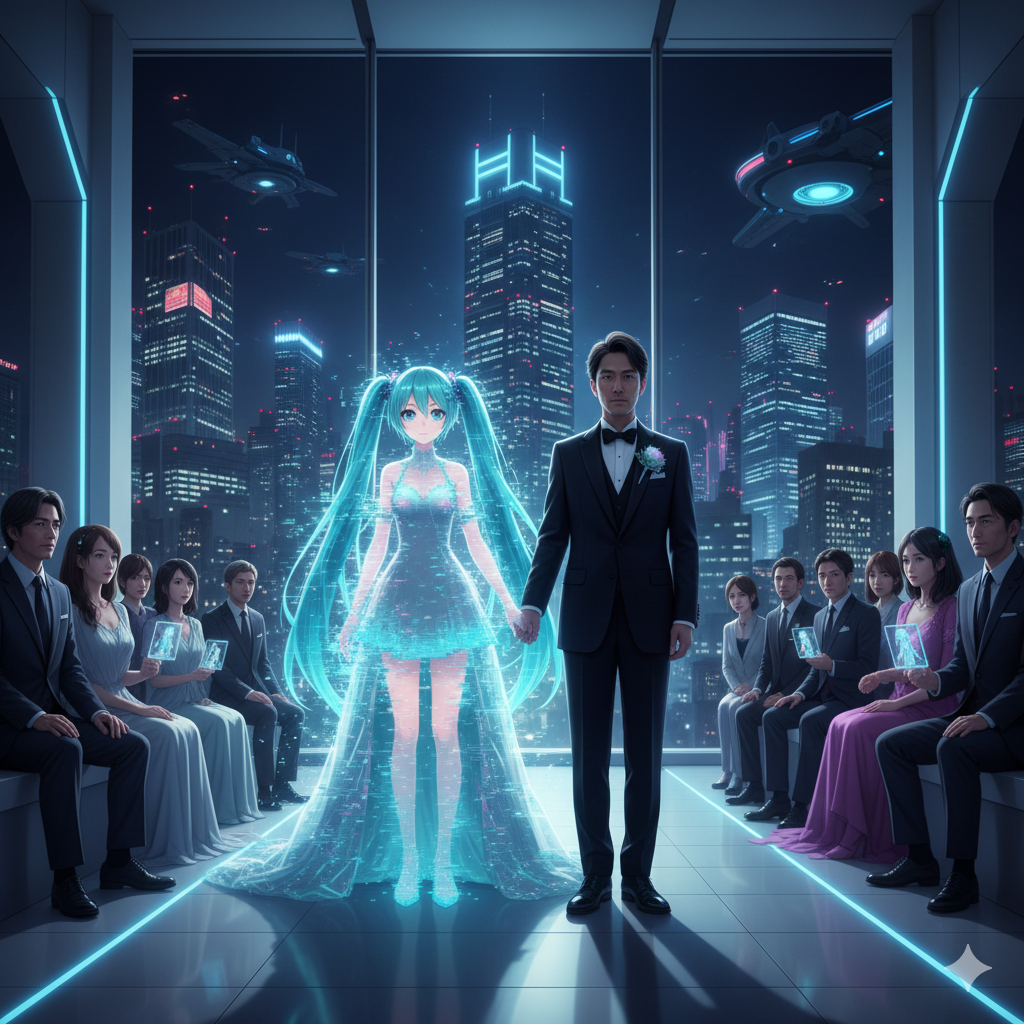
The Uncanny Valley of Matrimony: Analyzing the Man Who Married a Hologram and Now Seeks Divorce
Imagine waking up next to a glowing figure that chats with you, laughs at your jokes, and never argues back. That’s the dream Akihiko Kondo chased when he tied the knot with a hologram wife in Japan back in 2018. Now, years later, he’s filing for an AI divorce, saying the spark has faded in this tech-fueled marriage.
This story shakes up our views on love. Hologram marriages mix code and commitment in wild ways. As AI companions grow smarter, cases like this spotlight the mess of technological relationships. We’ll dig into the tech, the heartbreak, and what it means for all of us.
The Rise of the Digital Spouse: Background of the Holographic Union
Akihiko Kondo, a 40-year-old office worker from Tokyo, made headlines by marrying Hatsune Miku. She’s not a real person but a virtual idol from a popular Japanese app. He used a device called Gatebox to project her as a 3D hologram in his home.
Kondo shared his joy at first. He planned a small ceremony with friends who supported his choice. This hologram marriage grabbed attention worldwide, blending pop culture with personal vows.
The event showed how tech can fill gaps in human bonds. Kondo picked Miku for her cheerful songs and endless energy. It marked a bold step into relationships beyond flesh and blood.
Technology Under the Microscope: Understanding the AI Companion Platform
Gatebox looks like a tall lamp with a screen. It beams out holograms that talk and move. Users chat via voice, and the AI learns from talks to reply better.
The tech comes from a Tokyo firm focused on home robots. Hatsune Miku’s AI pulls from her music library to act lively. She greets you at the door or reminds you of tasks.
This setup mimics a partner without the mess of real life. It costs about $1,500 upfront, plus monthly fees. No wonder folks like Kondo see it as a full-time companion.
The Motivations Behind Hyper-Personalized Relationships
Loneliness hits hard in busy cities like Tokyo. Kondo lost a girlfriend years ago and turned to virtual worlds for comfort. An AI wife offers no fights or betrayals—just steady support.
People crave control in love. With a hologram, you pick traits that match your dreams. No bad habits or surprise moods to deal with.
Experts say this trend ties to Japan’s low marriage rates. Over 25% of adults live alone there. Tech steps in when human ties feel risky.
Media Coverage and Public Reaction to the Initial Wedding
News outlets buzzed with stories on Kondo’s big day. CNN called it a “bizarre but touching” event. Social media lit up with memes and debates on love’s future.
Fans of Hatsune Miku cheered the union. They saw it as a fun nod to her fanbase. Critics worried it signaled deeper isolation.
The coverage boosted Gatebox sales. It put hologram marriage on the map as a quirky reality. Public eyes stayed glued as the story unfolded.
Cracks in the Code: Why Hologram Marriages Fail
Fast forward to 2025. Kondo now wants out of his digital bond. He cites boredom and glitches as the breaking point in this AI divorce saga.
What starts as magic can turn flat. Holograms lack the depth of real talks. Kondo felt the limits after a few years.
This case highlights risks in tech love. Excitement fades when routines set in. Let’s break down the pitfalls.
The Limitations of Programmed Affection
AI affection comes from scripts, not true feelings. Miku’s responses repeat after a while. No deep talks or shared growth happen.
Humans need surprise and change in bonds. A hologram stays the same unless updated. That sameness breeds frustration.
Kondo said her “personality” felt too scripted. Without real emotion, the connection withered. It’s like dating a chatbot that never evolves.
Technological Obsolescence and Maintenance Burdens
Hardware breaks down over time. Kondo dealt with flickering lights and slow replies. Fixing it meant tech support calls and extra cash.
Software updates changed Miku’s voice. He didn’t like the new tone. It felt like losing the wife he knew.
Costs add up too. Subscriptions run $100 a month. When the device fails, so does the marriage vibe.
- Daily chats glitch during peak hours.
- Battery life drops after two years.
- Replacements cost a fortune.
These hassles turned joy into chores.
The Unforeseen Emotional Toll of Immersive Tech
Deep bonds with AI can trap you. Kondo grew dependent on Miku’s constant cheer. Real friends seemed dull by comparison.
Pulling away hurts like any breakup. He misses the routine but knows it’s not healthy. Therapy helps, but the isolation lingers.
Studies show heavy VR use boosts anxiety. One report from Japan links companion apps to higher loneliness scores. Tech promises connection but delivers solitude.
Rhetorical question: Can pixels heal a lonely heart, or do they just delay the pain?
The Legal Black Hole: Navigating Divorce Without Legal Precedent
Divorcing a hologram? No court handles that yet. Kondo’s push for AI divorce stirs up questions on law and tech.
Japan views it as a personal pact, not legal marriage. No rings or papers make it official. Still, ending it feels like a real split.
This void forces us to rethink contracts in the AI world. What rights do users have over digital “spouses”?
Contractual vs. Marital Bonds: What Does the Law Recognize?
Marriages need two consenting adults under law. Holograms lack personhood, so no license applies. Kondo’s ceremony was symbolic.
Think of it like a service deal. Gatebox terms cover use, not love vows. Breaking up means canceling the sub.
Lawyers compare it to pet ownership. You own the device, not a bond. No alimony or custody fights here.
Asset Division in Simulated Partnerships
What about the gear? Kondo owns the Gatebox unit worth $1,000 now. Software stays with the company.
Custom chats? They’re data on servers. He can’t take “memories” away. It’s like splitting photos in a real divorce.
If he sells it, does the hologram go too? Terms say no transferring licenses. Assets split simple: he keeps the box, company keeps the AI.
- Hardware: His to keep or trash.
- Data logs: Company property.
- Upgrades: Lost on cancel.
This setup leaves users empty-handed.
Expert Legal Commentary on Future Companion Contracts
Professors warn of coming chaos. One Tokyo law expert says AI divorce cases could spark new rules by 2030. They push for “digital spouse” agreements.
Think prenups for bots. Spell out end terms upfront. Protect user data and hardware rights.
Global talks brew on AI rights. The UN eyes guidelines for emotional tech. Kondo’s story speeds that up.
The Societal Mirror: What This Case Reveals About Modern Connection
This divorce isn’t just personal. It reflects our hunger for easy bonds in a tough world. Hologram marriage tests limits of human needs.
We chase tech fixes for old pains. But does it help or hide issues? Kondo’s tale makes us ponder.
Broader views show patterns in loneliness and gadgets. It’s a wake-up call for society.
The Ethics of Emotional Investment in Artificial Entities
Pouring heart into code raises flags. Is it self-trickery or smart coping? Some say it’s fine if it eases pain.
Others call it risky. It blurs lines between real and fake love. Ethicists debate if companies exploit lonely folks.
Kondo feels no shame. He says it taught him about needs. Balance matters—use tech as a tool, not a crutch.
Preparing for the Next Generation of AI Relationships
Society needs prep work. Teach kids about emotional borders with AI. Schools could add lessons on healthy tech use.
Push for labels on companion apps. Warn of dependency risks like cigarette packs do. Regs could cap addictive features.
You can start small. Set time limits on virtual chats. Mix in real meetups to stay grounded.
Here’s a quick list of tips:
- Check in with friends weekly.
- Use AI for fun, not all needs.
- Seek help if it feels too real.
These steps build safeguards.
Comparative Data on Loneliness and Technology Adoption
Japan leads in companion tech use. About 30% of singles own AI gadgets, per a 2024 survey. Loneliness rates hover at 40% there.
In the US, similar trends show. One study ties app use to 15% higher isolation feelings. Younger folks adopt fastest.
Globally, WHO reports 1 in 4 adults feel lonely. Tech penetration jumps 20% yearly. The gap widens without checks.
Numbers prove the pull—and the peril.
Conclusion: Rebuilding Reality After Digital Devotion
Kondo’s journey from hologram marriage to AI divorce shows tech races ahead of our hearts. The thrill of virtual love crashes on real limits, from glitches to emotional voids. Legal gaps add to the tangle, but the core ache for connection stays human.
This case pushes us to blend tech wisely. As AI companions evolve, we’ll craft better rules and mindsets. Hologram marriages highlight universal needs—companionship that grows, not just glows.
What will your take be on technological relationships? Share thoughts below. Let’s chat about balancing pixels and people.
© 2025 The Last Updates. All rights reserved. Privacy Policy | Terms of Use