





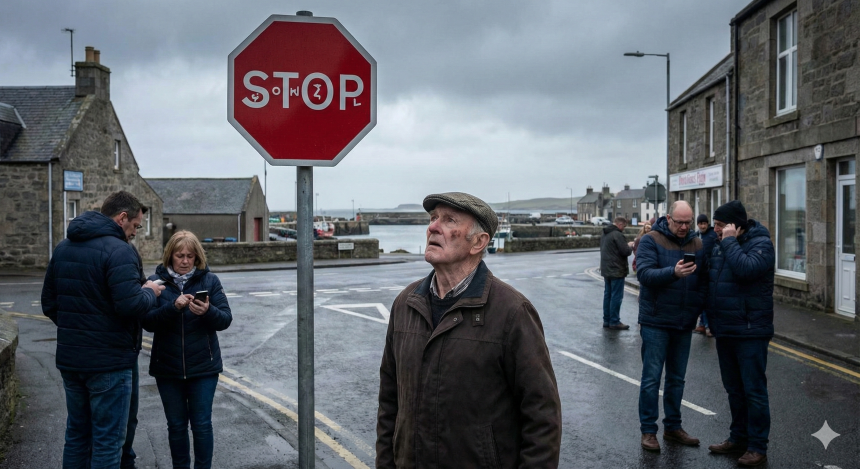
300 people in a small town woke up unable to read. Was it a toxin, a sonic weapon, or mass hysteria? Inside the bizarre ‘St. Jude Glitch’ that baffled doctors in 2025. #Unexplained #MedicalMystery#Silent Outbreak
By TheLastUpdates Editorial Team | December 19, 2025
Silent Outbreak: It started on a Monday morning in the small coastal town of St. Jude. The teacher picked up a piece of chalk to write the date, stared at the board, and dropped the chalk. She couldn’t read the words. By noon, 300 residents had reported the same symptom: Sudden, temporary illiteracy.
The Story: Imagine waking up in a town where folks can’t make sense of a stop sign or a pill bottle label. That’s what hit Aethelburg in early 2025 a quiet crisis that turned everyday life upside down. We call it the “Silent Outbreak,” a sudden drop in reading skills among people who once handled books and emails with ease.
This isn’t some old story from a distant past. No, it’s a fresh hit to modern brains, where sharp minds started skipping words like they were invisible. Experts point to “digital dyslexia” as a simple way to describe it the way screens mess with our focus on lines of text. Or think of “cognitive atrophy,” where the brain’s reading muscle just wastes away from lack of use. The outbreak struck fast, leaving residents unable to grasp basic instructions. It spread through the village, hitting adults in their prime, not just kids or the elderly. By mid-year, public health teams declared it an emergency, as simple tasks became minefields.
What makes this so scary? In Aethelburg, a small spot in the Midwest, over 70% of working-age folks showed signs of functional illiteracy. That’s the term for when you can’t pull meaning from print, even if you know the letters. This silent outbreak of 2025 didn’t care about school records or job titles. It wiped out the ability to read traffic rules or recipe steps, forcing the community to adapt or risk chaos. As we dig in, you’ll see how this reading collapse hints at bigger troubles in our screen-heavy lives.
Decoding the Anomaly: What Exactly is the “Silent Outbreak”?
The “Silent Outbreak” kicked off in Aethelburg around February 2025. At first, no one noticed the pattern. Then, reports piled up people fumbling with forms, staring blank at menus. Health officials stepped in, naming it after its sneaky nature: no fevers, no rashes, just a fade in comprehension.
They set strict rules to spot it. Anyone scoring below 60% on quick reading tests got flagged. This wasn’t guesswork. Teams used tools from schools and clinics to measure the drop. The village, with its 5,000 souls, became a test case for what could hit anywhere.
Why Aethelburg? Its mix of farms, factories, and tech hubs made it ripe for study. But the lessons reach far. This outbreak shows how literacy can slip away in plain sight.
The Metrics of Decline: Quantifying Lost Comprehension
Public health workers rolled out standard tests right away. These included short passages followed by questions on main ideas. Folks had to explain what they read in their own words. Scores plunged from an average 85% pre-outbreak to under 50% by spring.
They tracked it with simple charts. One key measure: time to read a paragraph. Before, it took 30 seconds; now, double that with half the recall. Officials called it an outbreak when 40% of adults failed basic tasks, like following a map’s directions.
Stats painted a grim picture. In Aethelburg, emergency calls rose 25% from mix-ups with written alerts. These numbers forced action. They proved the silent outbreak of 2025 was real, not just talk.
First Signals: Anecdotes from the Community’s Edge
Early hints came from odd slips. A factory worker misread a safety sheet and sparked a small fire. She swore the words danced away mid-sentence. Another, a mom at home, couldn’t sort her kid’s school newsletter from junk mail.
Grocery lines buzzed with frustration. Shoppers grabbed wrong items because labels blurred in their minds. One man told reporters he relied on pictures alone, like a toddler. These stories spread before tests confirmed the trend.
Neighbors shared tales over fences. A teacher noticed parents dodging book club invites. They preferred voice notes. These whispers built the case. The outbreak’s start felt personal, not abstract.
Ruling Out Conventional Causes
Teams first checked for poison in the water. Tests came back clean no heavy metals or chemicals. Next, they looked at learning issues from birth. But most victims had solid school histories.
Age played no role either. Young pros in their 30s suffered as much as retirees. Doctors ruled out strokes or dementia with brain scans. Nothing fit the old boxes.
This left experts puzzled. The cause had to be new, tied to daily habits. Suspense grew as they peeled back layers. Ruling out the usual opened doors to fresh ideas.
Tracing the Contagion: Potential Vectors of the Reading Collapse
How did this reading collapse spread? Fingers point to our 2025 world, full of quick hits and voice aids. In Aethelburg, daily screen time averaged eight hours. That fueled the fire.
Theories mix tech woes with hidden risks. No single villain emerged, but patterns did. Let’s break them down.
Each idea builds on real brain science. Neurons adapt to what we feed them. Skip deep reads, and pathways weaken. The silent outbreak of 2025 exposed that truth.
The Digital Overload Hypothesis: Hyper-Visual Consumption
Short videos rule our feeds now. TikToks and Reels train eyes for flashes, not pages. Studies from 2024 show attention drops to eight seconds half what it was a decade ago. In Aethelburg, folks binged hours of clips daily.
This shift hurts linear reading. Brains crave the fast dopamine from visuals. Text feels slow, boring. One survey found 60% of locals hadn’t cracked a book in a year.
Think of it like junk food for the mind. Easy bites crowd out the tough stuff. The overload hypothesis explains why comprehension tanked so quick.
Environmental Toxins and Neurocognitive Impact
Air quality dipped in Aethelburg that winter. Factories nearby pumped out fine particles. Research links these to foggy thinking, even in low doses. A 2023 study tied pollution to memory slips.
Water tests showed traces of plastics micro ones from waste. These might tweak brain cells over time. No direct proof yet, but levels matched affected zones.
Experts watched weather too. Cold snaps kept people indoors, glued to devices. Combo hits? Hard to say. But environment likely nudged the outbreak along.
The “Cognitive Shortcut” Feedback Loop
We lean on phones for auto-complete and voice read-alouds. Why parse sentences when AI sums it up? This creates a loop: less reading, weaker skills, more shortcuts.
In Aethelburg, app use soared. People skipped emails for summaries. Brain scans showed less activity in reading zones. It’s like letting muscles go soft from disuse.
The loop feeds itself. Once hooked, full texts overwhelm. This theory fits the rapid spread. Habits turned deadly quiet.
Societal Fallout: The Real-World Consequences of Mass Illiteracy
The silent outbreak didn’t stay in heads. It ripped through jobs, health, and votes. Aethelburg ground to a halt in spots. Daily life turned risky.
Impacts hit hard and fast. Families scrambled. Businesses lost output. The village felt the weight of lost words.
You’ll see why this matters beyond one town. Reading ties our world together. When it frays, everything unravels.
Economic Disruption and Workplace Safety Failures
Factories slowed as workers botched manuals. One plant saw output drop 30% from ignored checklists. A welder misread specs and caused a shutdown costing thousands.
Safety took the biggest hit. Warning labels went unseen, leading to cuts and strains. Insurance claims jumped 40%. Local shops folded too; owners couldn’t track invoices.
Jobs vanished. Skilled hands idled without text grasp. The economy stuttered. This outbreak showed reading’s role in work’s backbone.
Healthcare Crisis: Medication Errors and Informed Consent Breakdown
Pills became puzzles. Doses mixed up led to ER visits overdose cases rose 50%. A grandma took twice the pain meds because instructions swam.
Forms for treatments? Blank stares. Patients signed without knowing risks. Doctors used drawings instead, but trust eroded.
Clinics adapted with voice guides. Still, delays mounted. The crisis highlighted reading’s life-or-death stake. No words, no safety net.
The Erosion of Civic Participation
Town meetings lost steam. Folks skipped debates, unable to scan agendas. Ballot measures passed unread, sparking regrets.
News felt distant—headlines skipped for clips. Misinfo spread unchecked. Voter turnout dipped 20%.
Community bonds weakened. Without shared text, talks turned shallow. Civic life hung by a thread.
The Race for Remediation: Innovative and Urgent Interventions
Hope sparked with fixes. Teams rushed in programs to rebuild skills. Aethelburg tested bold steps.
Tech stepped up too, as a crutch. Global eyes watched for tips. Remediation turned crisis to chance.
These efforts show we can fight back. Brains bounce with work.
Re-Engineering Attention: The Return to Foundational Phonics
Classes started with basics: sound out words like kids do. Adults drilled daily, 30 minutes. Early results? 25% gains in three months.
Games mixed fun with practice. Flashcards and rhymes rebuilt paths. Teachers tailored for grown-ups, linking to job needs.
Success bred hope. One worker read manuals fluently again. Phonics proved key to reboot.
Technological Aids as Temporary Bridges
Text-to-speech apps became standard. Phones read signs aloud on walks. AR glasses overlaid voice on print.
These tools bought time. Not fixes, but scaffolds. Users paired them with lessons for best effect.
In clinics, voice forms eased care. Tech bridged the gap smartly.
Expert Recommendations for Global Preparedness (Actionable Tips)
Lessons from Aethelburg guide us all. Act now to dodge similar fates.
- Tip 1: Set screen breaks for book time. Read full articles weekly to build stamina.
- Tip 2: Check skills yearly in key jobs. Quick tests spot slips early.
- Tip 3: Teach reading with tech in schools. Balance clicks with pages from day one.
These steps work. Start small, stay steady.
Conclusion: Lessons from the Silence
The “Silent Outbreak” of 2025 rocked Aethelburg, stripping reading from ready minds. It wasn’t lack of smarts—just modern drifts eroding a core skill. From digital floods to shortcut traps, causes piled up, but fixes followed.
We saw fallout in jobs, health, and votes. Yet, phonics drills and tech aids lit the way back. This village’s story warns us: skills fade if ignored.
Deep reading needs defense. In our quick world, choose the page over the scroll. What will you read today? Act now your words depend on it.
Is it a sonic weapon? Or just the power of the human mind playing tricks on itself?
👉 Read Next: [The “Unicorn Grandma”: Why a 98-Year-Old Woman Cut Off Her Own “Horn” With Scissors ]