


The Ultimate Guide to Low Stim Toys for Toddlers (2026)
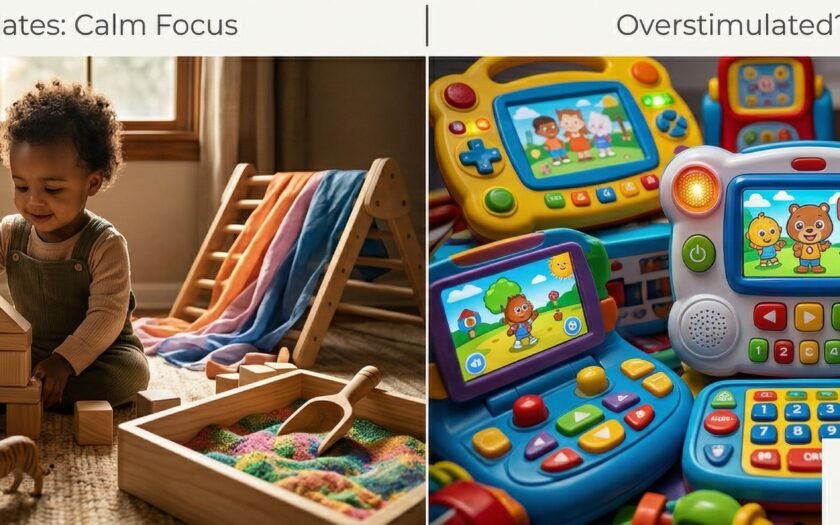
If you have walked down the toy aisle recently, you already know the feeling: flashing lights, blaring sirens, and plastic screens competing for your child’s attention. While these toys promise to entertain, they often leave toddlers overstimulated, cranky, and demanding constant entertainment.
In 2026, a massive shift is happening in child care. Parents are stepping back from the digital noise and embracing low stim toys for toddlers.
Whether you are trying to heal a chaotic playroom or simply want to encourage longer stretches of independent play, swapping high-tech gadgets for mindful, open-ended toys is the ultimate parenting hack. Here is everything you need to know to make the switch.
What Exactly is a « Low-Stim » Toy?
A low-stimulation toy is exactly what it sounds like: a plaything that doesn’t overwhelm the senses. These toys require the child to do the work, rather than the toy doing the work for them.
Key characteristics of low-stim toys include:
- Battery-Free: No flashing lights, automated voices, or electronic music.
- Open-Ended: They can be used in dozens of different ways (e.g., a block can be a phone, a car, or a house).
- Natural Materials: Often made of wood, silk, cotton, or food-grade silicone, providing a grounded tactile experience.
- Realistic Aesthetics: They feature natural colors and realistic proportions rather than hyper-exaggerated, neon cartoons.
The Science: High-Stim vs. Low-Stim Play
Why does a singing plastic tablet lead to a meltdown, while a simple set of wooden blocks keeps a toddler engaged for an hour? It comes down to brain chemistry.
High-stim toys provide immediate, effortless dopamine hits. The child pushes a button, and the toy performs. However, this creates a passive loop. The brain quickly adapts to the flashing lights and demands more stimulation to stay entertained, leading to shorter attention spans and frustration when the toy is turned off.
Low stim toys for toddlers flip the script. Because the toy doesn’t « do » anything on its own, the child must use their imagination, fine motor skills, and problem-solving abilities to create the play. This type of active engagement builds neural pathways associated with deep focus, emotional regulation, and creativity.
Top 7 Low-Stim Toys for 1 to 3-Year-Olds
Ready to detox the playroom? Here are the top foundational items that will grow with your child for years.
1. Classic Wooden Building Blocks
The ultimate open-ended toy. A high-quality set of solid, unpainted wooden blocks teaches gravity, spatial awareness, and balance. Today they are a tower; tomorrow they are a fence for toy animals.
2. Realistic Animal Figurines
Skip the cartoonish, neon animals and opt for highly detailed, realistic animal figures. These are incredible for language development, sensory bins, and imaginative small-world play.
3. Silk Play Scarves
It seems too simple to be true, but a set of colorful play silks is a toddler staple. They can be used as capes, picnic blankets for dolls, peek-a-boo props, or « water » for a toy boat.
4. The Pikler Triangle
For toddlers who need to burn off physical energy indoors, a wooden Pikler triangle is a game-changer. It satisfies their natural urge to climb in a safe, low-tech way, building gross motor skills and physical confidence.
5. Open-Ended Sensory Bins
A shallow tub filled with dried beans, rice, or kinetic sand, paired with wooden scoops and cups, offers profound tactile feedback. Sensory play is incredibly regulating for a toddler’s nervous system.
6. Magnetic Wooden Tiles
A tactile upgrade from standard plastic tiles, magnetic wooden blocks allow toddlers to build 3D structures easily, offering a satisfying « click » without any electronic noise.
7. Chunky Wooden Puzzles
Puzzles with simple, realistic imagery (like fruits, vehicles, or animals) are perfect for developing hand-eye coordination and shape recognition at a quiet, focused pace.
How to Transition Your Playroom Without the Tears
You don’t need to throw away every plastic toy in your house tonight. Transitioning to low stim toys for toddlers should be a gradual, peaceful process.
- Start a Toy Rotation: Divide your current toys into three bins. Keep one bin out and hide the rest in a closet. Rotate them every two weeks. Fewer choices instantly reduce visual overwhelm.
- Remove the Batteries: Take the batteries out of the loudest toys. You might be surprised to find your toddler still plays with the toy, but in a much calmer, imaginative way.
- Curate the Environment: Display low-stim toys beautifully. Instead of dumping blocks in a deep toy box, arrange a few of them on a low, accessible shelf.
Embracing low-stim play isn’t just about buying new wooden items; it is about creating a peaceful environment where your child’s natural curiosity can thrive.